Skip to content

National Youth Sports Survey: Share Your Voice!

The Aspen Institute Sports & Society is surveying youth across the nation to gather feedback on their participation in and feelings about sports. The results of the National Youth Survey will help drive meaningful change in youth sports.

The survey collects the following information:

  • Basic demographic details (no personally identifiable information)
  • Current sports participation and interest in trying new sports
  • Reasons behind current levels of participation
  • Experiences and the impact of current sports involvement

All youth ages 10–17 are invited to take the National Youth Survey by November 30, 2025. All responses are anonymous.

Take the survey!

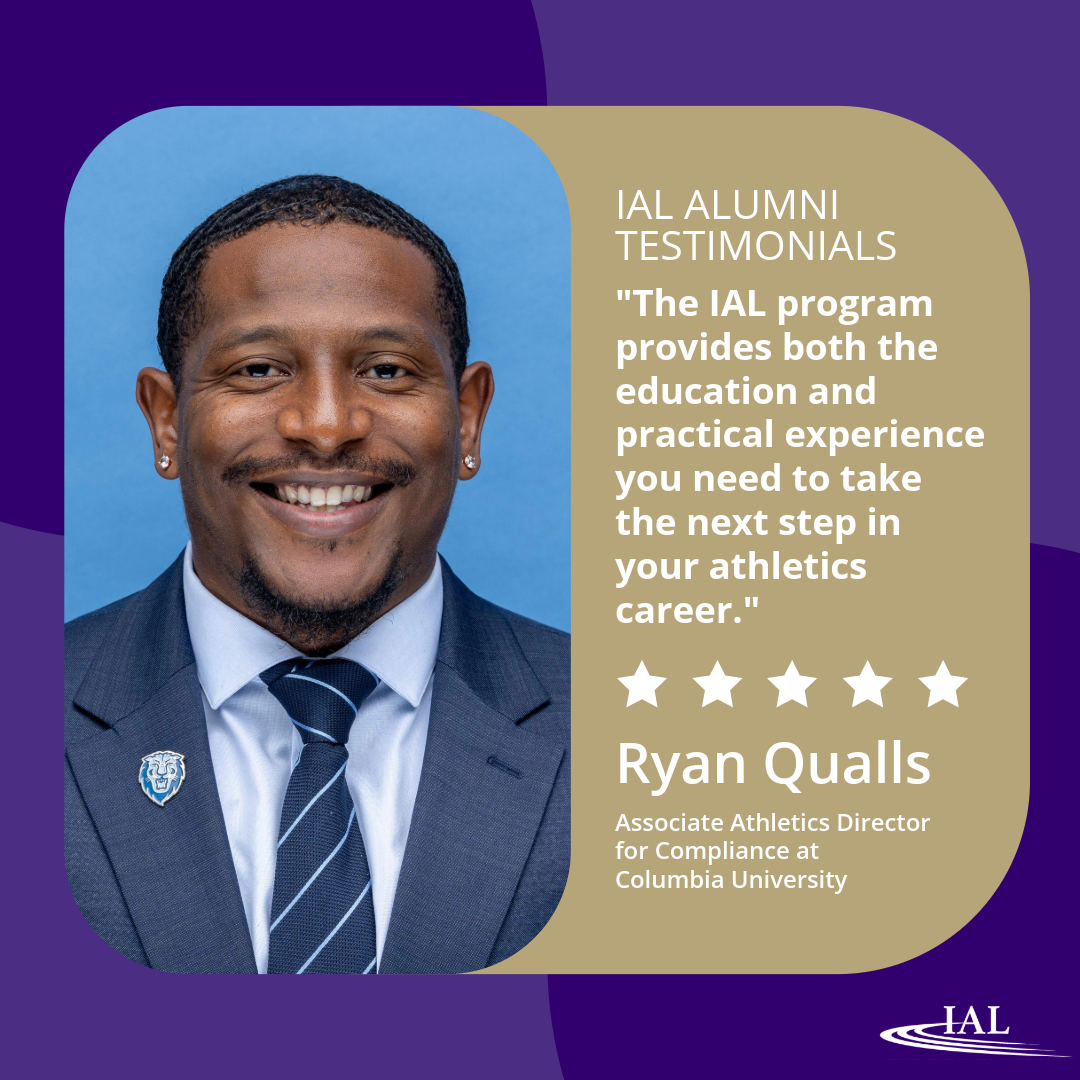
UW IAL M.Ed. Alumni Spotlight: Ryan Qualls

Ryan Qualls is Columbia Athletics’ Assistant Athletics Director for Compliance and graduated from the University of Washington’s Intercollegiate Athletic Leadership (IAL) M.Ed. program in 2014. He recently spoke with Jake Silver from the University of Washington’s Center for Leadership in Athletics about the impact the IAL program has had on his career. 

This interview has been edited for clarity and conciseness.

Q: What initially drew you to the IAL program, and how did it align with the professional goals you had at the time?

A: I was focused on finding a program that checked all the boxes for what I wanted. When I first started considering a career in college athletics, I researched several programs, and the IAL program stood out the most. One reason was that it was housed at a Power Five institution, which was something I really wanted. Another major factor was the opportunity to take classes and gain work experience at that time. Plus, Seattle in the summertime is beautiful, so that was a bonus. The strong alumni network was another benefit; having past graduates help place you with your internships was a huge advantage. Getting my master’s degree while also completing an internship gave me a solid foundation. I was essentially starting from the bottom, and that internship experience at the University of Washington’s compliance office set me on the path I’m on today. It was incredibly beneficial for my career.

Q: Looking back, which part of the IAL experience had the biggest impact on your professional growth?

A: I would definitely say the internship. I got to learn from some of the best in the field. Kyle Pifer, who I believe is now the Athletics Director at Western Carolina, was the head of compliance when I was at UW. Wilk Kava, who’s now the Deputy AD at Mizzou, was my mentor and the person I worked with every day during the internship. There are still people at UW I stay in touch with, like Kylie and Mary Lou, who are still working in the compliance office. I reach out to them a couple of times a year, whether it’s for professional reasons like tracers or transfer discussions, or just to catch up.

Q: Have there been any pivotal moments or decisions in your career where you have drawn back on the IAL program?

A: Absolutely. The IAL program really covers all aspects of an athletics department. Even though I was mainly focused on compliance, I had to complete a development project; mine was about bringing back the University of Pacific football team in Stockton. Through that project, I learned about development, internal and external operations, budgeting, and more. Those experiences have helped me in my current role as Associate Athletic Director at Columbia. For example, last year I had to plan my department’s budget for the first time and have complex conversations with our Athletics Director. 

Q: In what ways do you continue to engage with the IAL network?

A: I still stay in touch with many of my classmates, mostly just to check in and see how they are doing. Seeing them grow their families, get married, and succeed in their careers. I run into them at events like NCAA Regional Rules or the NACDA Convention. Outside of the IAL program, I also keep in touch with my mentors from the UW Compliance Office. I just emailed Will Kava a few days ago, and I spoke with Kylie and Mary Lou earlier this year. I even told them I might come to a football game this season. The bond you form with your cohort is special, it’s a fast-paced 12-month program, and those connections last a lifetime.

Q: What advice would you give to anyone considering the IAL program?

A: My advice would be to do your research and make the decision that’s best for you. What you get from the IAL program is a first-class education at the University of Washington, one of the best universities in the world. You also get early job experience, which is something many programs do not offer. The internship is mandatory and built into the curriculum, so you’re guaranteed that hands-on experience. That’s a huge advantage because in this industry, you need experience to get your foot in the door. The IAL program provides both the education and practical experience you need to take the next step in your athletics career.

UW CLA Researchers Share Insights on International Coach Education Study

Dr. Julie McCleerly, UW CLA Co-Director and Professor of Practice, and Dr. Longxi (Jack) Li, UW CLA Postdoctoral Associate and Measurement, Evaluation, & Research Coordinator, recently spoke with the School Health Pulse about our international coach education study. Dr. McCleerly and Dr. Li analyzed data from over 180,000 youth sport coaches who participated in various training and professional development programs.

Watch the School Health Pulse episode above to discover what our research reveals about the most impactful approaches, and why supporting individuals beyond coaches may be essential for improving youth sport environments.

CoachUp! WA Coach and Athlete Study Findings

In 2021, in collaboration with the Washington Interscholastic Activities Association, the UW CLA launched CoachUp! Washington. The study aimed to measure the impact of an evidence-informed online coach education program through pre- and post-season data collected directly from student-athletes and coaches. Half the coaches took the course and the other half did not and results were compared. Support from the NFHS Foundation enabled sustained coordination including recruitment, course delivery, testing, analysis, and incentives for participation.

Study findings include:

  • Athletes with trained coaches reported better mental health status and perceived fewer controlling coaching behaviors.
  • Even short coaching courses have positive benefits for coaches and student-athletes if well-designed and evidence-informed.
  • Training produced positive effects in domains most associated with harm prevention and athlete well-being.

One Million Coaches Trained: What’s Next for Youth Sports Coaching

Across the U.S., more than 38 million kids play organized sports each year. Sports can be one of the most powerful experiences of childhood—building confidence, resilience, belonging, and joy. But too often, coaches enter the role without the tools they need to create safe, inclusive, and supportive environments.

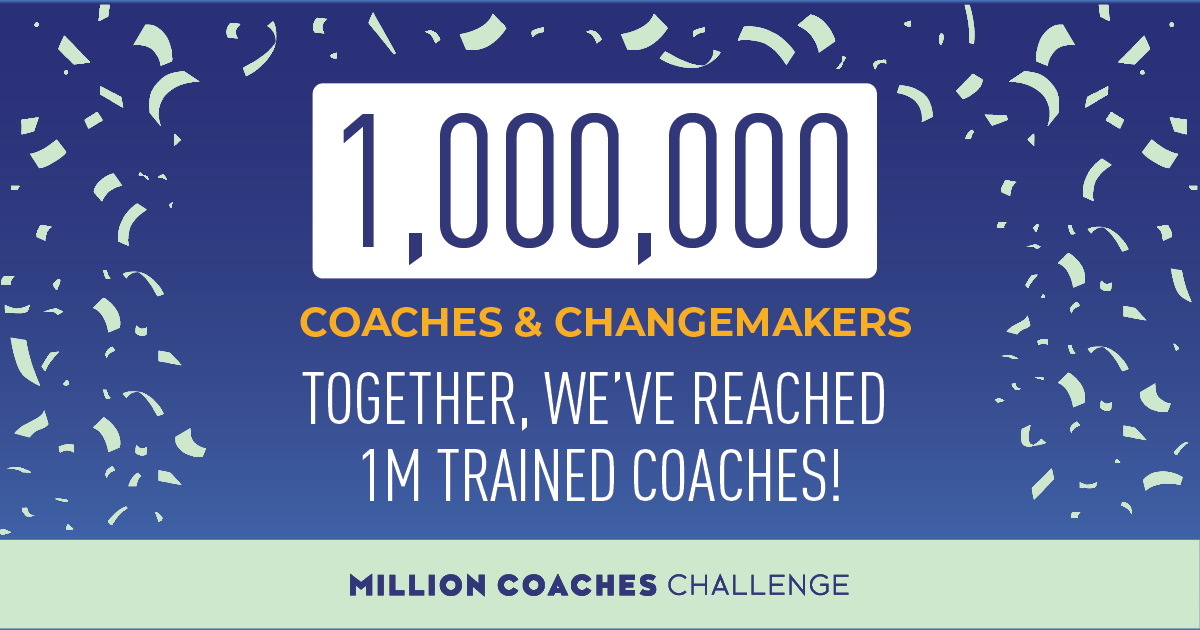
That’s why in 2021, the University of Washington Center for Leadership in Athletics partnered with the Million Coaches Challenge (MCC) with a bold vision: train one million coaches in youth development practices by the end of 2025.

Today, we are proud to announce: the goal has been reached. One million coaches trained.

Why It Matters

  • 1 million coaches are now better equipped to help kids win on and off the field.
  • Millions of kids have coaches who listen, encourage, and create belonging.
  • MCC-trained coaches report more confidence (93%), believe training benefits all coaches (94%), and see athletes experiencing more joy, stronger friendships, and greater retention in sport.

This milestone proves what’s possible when the field unites behind a bold vision. But it’s not the finish line, it’s the starting line.

What’s Next

Alongside this achievement, MCC is releasing two new resources to guide the next chapter of change:

  • A Practice Guide for Youth Coaches: 12 Coaching Strategies to Support Positive Youth Development: practical, evidence-based strategies that coaches at every level can put into practice right away.
  • Calls to Action: A Vision for Youth Sports Coaching in the U.S.: a shared vision for systemic change, organized across four areas:
    • Insights – evidence-based frameworks, rigorous research, accessible resources
    • Narrative – elevating coach and athlete stories, recruiting diverse coaches, shifting recognition
    • Organizational Practice – requiring high-quality training, setting clear standards, removing barriers
    • Policy – advancing oversight, requiring ongoing training, securing sustainable funding

When we invest in coaches, we invest in kids, in communities, and in the future of sport. Together, we can make high-quality coaching the standard—not the exception.

Upcoming UW IAL M.Ed. Information Session!

Do you want to work in the fast-paced world of athletics? Do you want to make a difference in the lives of student-athletes?

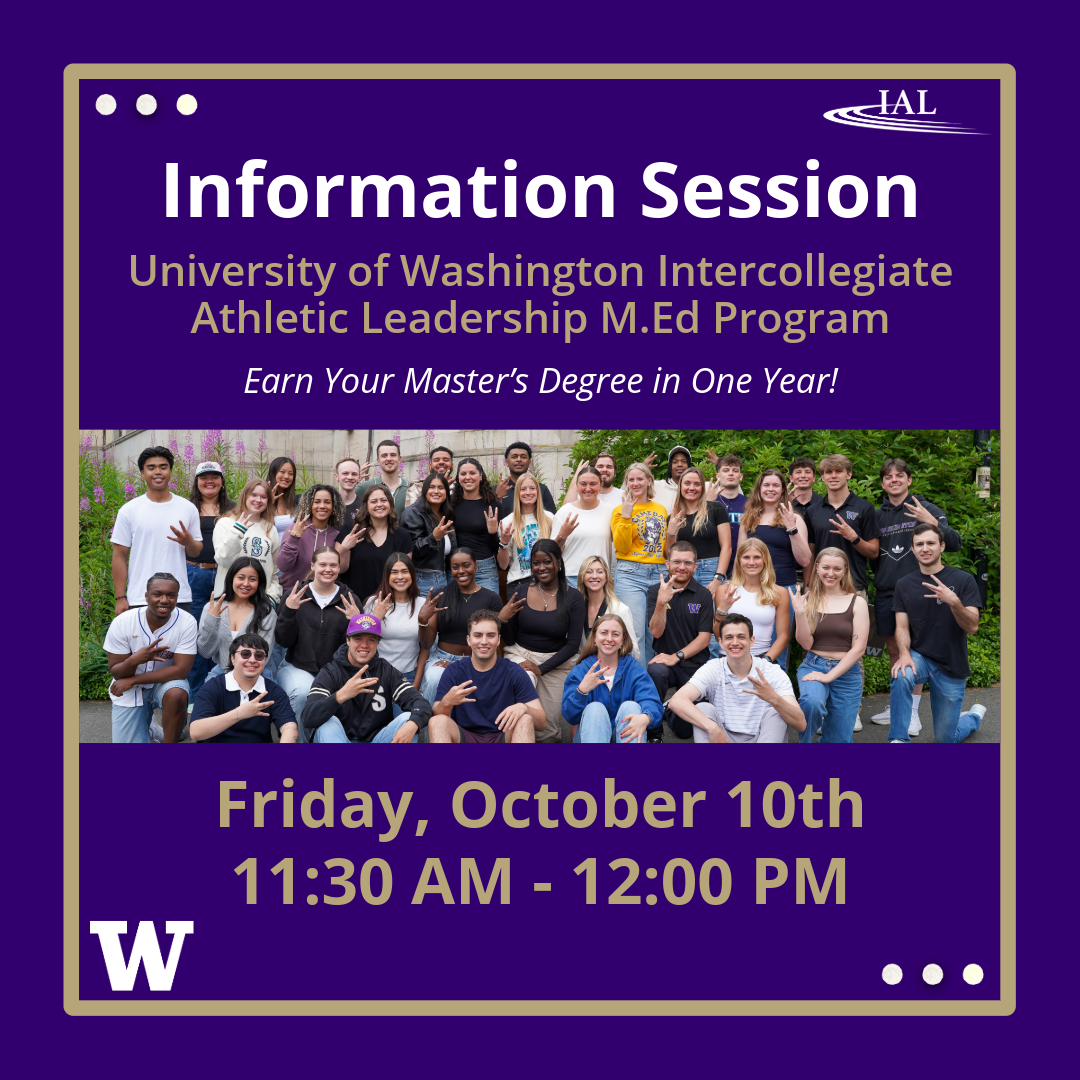
Join us for the upcoming University of Washington Intercollegiate Athletic Leadership M.Ed. Virtual Information Session on Friday, October 10, from 11:30 AM to 12:00 PM (PST). Hear from Program Specialist Madison Blatchford and IAL alumni, followed by a Q&A session.

Take Our New Coaching Course: Built on Research, Designed for Impact!

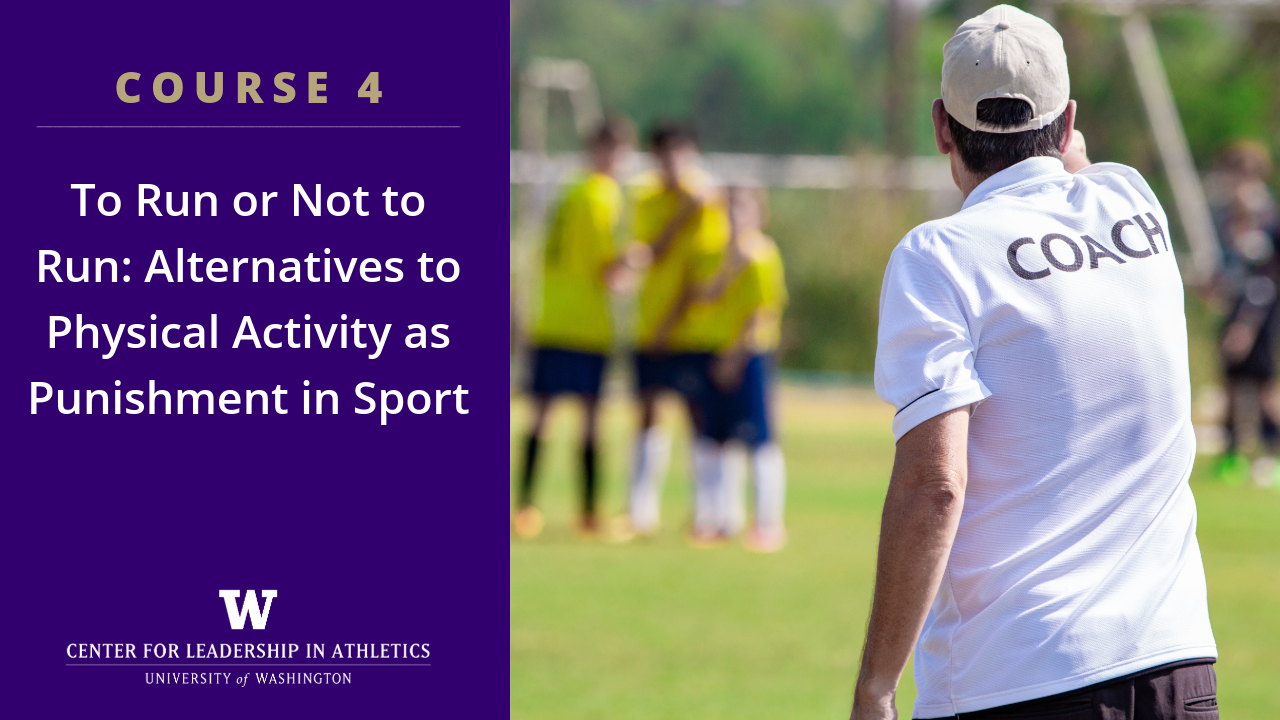
The use of physical activity as a consequence is widely used and accepted in sports. The UW CLA’s new eCourse, To Run or Not to Run: Alternatives to Physical Activity as Punishment in Sport, examines why coaches choose this approach to teaching and explores what research and athletes have to say about this type of coaching.

Is using physical activity to punish the best way to motivate, develop, and prepare athletes? Does it truly simulate performance and competition? This course invites you to reflect on your own coaching practices and equips you with strategies and tools to address performance and behavioral issues without using physical activity as punishment.

Take the course now and step up your coaching!

Register for Washington Youth Soccer’s inaugural United for the Game – Soccer Symposium

Calling all coaches and educators!

Be part of Washington Youth Soccer’s inaugural United for the Game – Soccer Symposium, taking place July 19–20 at the University of Washington campus. Sam Brown and Jennifer Peterson from the UW CLA Coach Development team will be facilitating two sessions at the symposium: one on the coach’s role in supporting athlete mental health, and another on youth-specific athlete development and training strategies

This two-day event features a dynamic lineup of sessions and workshops covering topics, including:

  • Mental health and wellness in youth sports
  • Creating safe, inclusive, and respectful environments
  • Coach mentorship and development
  • Positive motivation strategies
  • Safe and effective training practices for young athletes

Highlights include:

  • Coach Development Tracks – From WIAA certification to entry-level and advanced training
  • Keynote Address by Lesle Gallimore, Seattle Reign GM and Seattle soccer icon
  • Free Seattle Sounders Match Ticket for all attendees
  • Educator Resources – Soccer curriculum for PE and literacy tools for early learners
  • Community Collaboration – Connect with clubs and organizations from across the region
  • Bonus Film Screening – #SheBelongs: The Movie, presented with Refugee Soccer and UW Global Sport Lab, on Friday, July 18, 6:30–8:30 PM at the Rose Auditorium

Register here!

Spots are limited—don’t miss your chance to be part of this movement.

UW IAL M.Ed. Alum Works with Seattle Sounders to Give Kids Access to Play

Luis Carmona fell in love with Seattle Sounders FC in 2009. In 2022, he graduated from the UW IAL M.Ed. program. Today, he works with the RAVE Foundation, the nonprofit arm of the Sounders and Seattle Reign FC, empowering youth through access to sport. Watch the video below to see how the UW IAL M.Ed. program prepared him for his career.

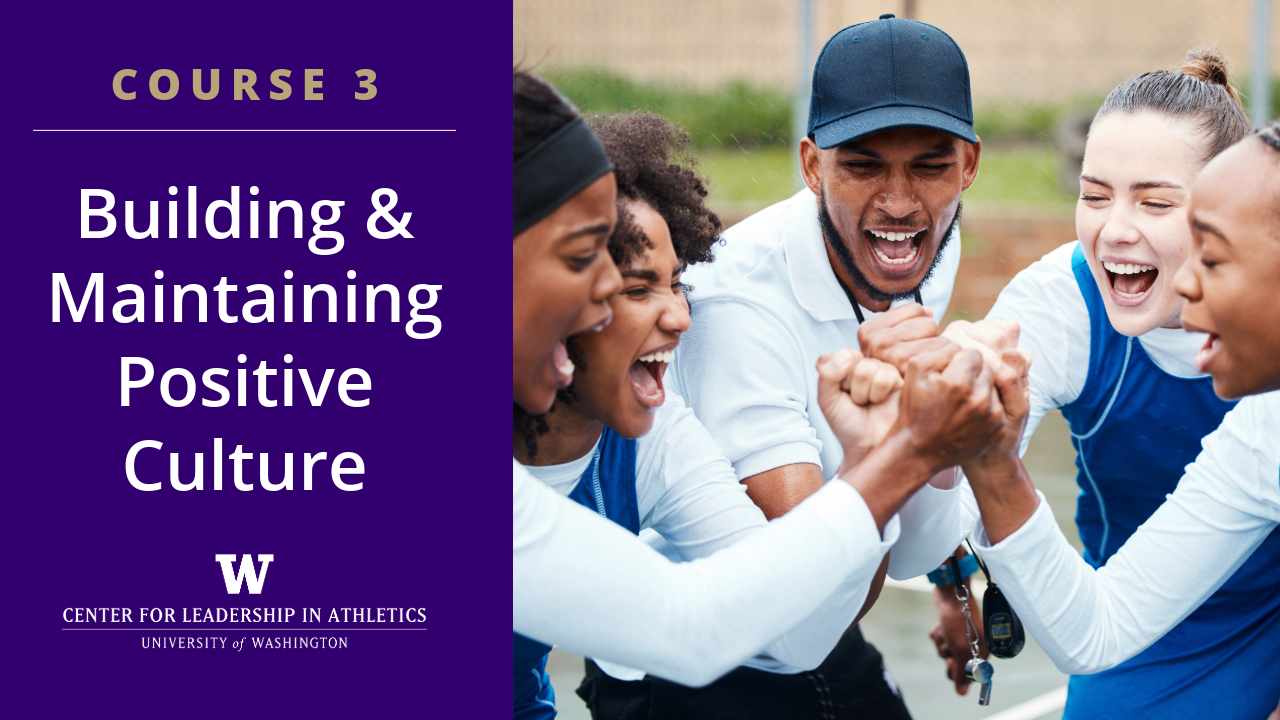
Building & Maintaining Positive Team Culture

A positive culture is critical to a team’s success. Want to learn how to create one? Take the UW CLA’s new eCourse: Building & Maintaining Positive Team Culture.

In under an hour, you will learn how to:

  • Understand the core elements of a positive team culture
  • Apply practical strategies to build and maintain that culture
  • Navigate and overcome common challenges and tensions
  • Use guiding questions to create a healthy environment for your athletes

Take the course here!